

HOW GUT MICROBIOME AFFECTS HORMONE HEALTH
How the Gut Microbiome Affects Hormone Health
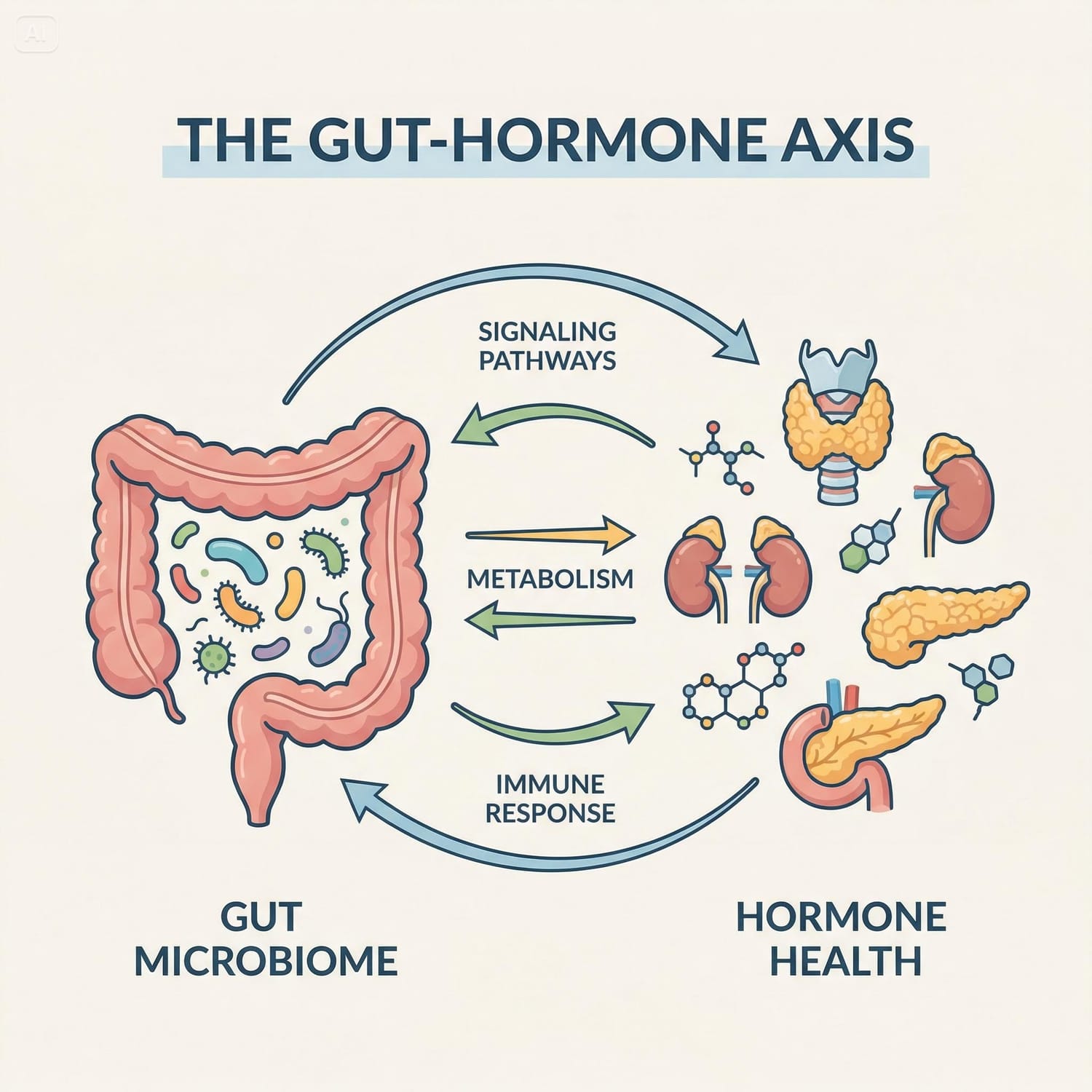
Did you know your gut is like a control center for your hormones? A healthy gut microbiome doesn’t just aid digestion—it helps regulate everything from stress and sleep to fertility and metabolism. When your gut bacteria are out of balance, your hormones often are too. Supporting your gut might just be the missing key to hormonal harmony.
The connection between your gut and hormones is more powerful than most people realize. While we often associate gut health with digestion alone, the trillions of microbes living in your digestive tract—known as the gut microbiome—play a vital role in regulating your body’s hormonal balance. From mood and metabolism to fertility and thyroid function, your hormones rely on a healthy, balanced microbiome to function optimally.
In this article, we’ll explore how the gut microbiome affects hormone health, dive into some key microbial-hormonal interactions, and share what you can do to support this vital connection.
What Is the Gut Microbiome?
The gut microbiome refers to the diverse community of microorganisms—including bacteria, fungi, viruses, and archaea—living in your gastrointestinal tract. These microbes do more than help digest food; they influence immune function, produce vitamins, combat pathogens, and importantly, regulate hormones.
According to the Nature Reviews Microbiology (2012), the gut microbiota plays a critical role in nutrient absorption and metabolism, which directly affects hormone production and balance [1].
How Gut Bacteria Affect Hormones
1. The Estrobolome and Estrogen Balance
One of the clearest examples of gut-hormone interaction is the estrobolome—a collection of gut bacteria that metabolize and regulate estrogen.
These microbes produce an enzyme called beta-glucuronidase, which influences how estrogen is reabsorbed or excreted. When the estrobolome is imbalanced (due to dysbiosis), it can lead to excess circulating estrogen, which may contribute to conditions like PMS, endometriosis, PCOS, and estrogen-driven cancers.
📚 Reference: Plottel and Blaser, “Microbiome and Malignancy,” Cell Host & Microbe, 2011 [2].
2. Cortisol and the Gut-Brain Axis
Cortisol, your body’s primary stress hormone, is regulated through the gut-brain axis—a two-way communication system between your central nervous system and the enteric nervous system (your “second brain”).
A healthy gut microbiome helps buffer the body’s response to stress, lowering cortisol levels and reducing inflammation. Conversely, gut dysbiosis can heighten the stress response and worsen anxiety, depression, and hormone imbalance.
📚 Reference: Foster & McVey Neufeld, “Gut–brain axis: how the microbiome influences anxiety and depression,” Trends in Neurosciences, 2013 [3].
3. Thyroid Function
Your thyroid hormones (T3 and T4) are essential for metabolism, energy, and hormone regulation. Gut bacteria influence thyroid function in several ways:
They help convert T4 (inactive thyroid hormone) to T3 (active form).
They influence nutrient absorption, including iodine, selenium, and zinc—essential cofactors for thyroid hormone production.
Gut inflammation can trigger autoimmune responses such as Hashimoto’s thyroiditis.
📚 Reference: Virili et al., “Gut microbiota and Hashimoto’s thyroiditis,” Reviews in Endocrine and Metabolic Disorders, 2018 [4].
4. Insulin and Blood Sugar Regulation
An imbalanced gut microbiome can lead to insulin resistance, contributing to blood sugar issues and conditions like PCOS and type 2 diabetes.
Certain bacterial strains influence short-chain fatty acid (SCFA) production—particularly butyrate, which improves insulin sensitivity and reduces inflammation. A lack of these beneficial bacteria may impair glucose metabolism and increase the risk of hormonal imbalances.
📚 Reference: Canfora et al., “Gut microbial metabolites in obesity, NAFLD and T2DM,” Nature Reviews Endocrinology, 2019 [5].
Signs Your Gut May Be Impacting Your Hormones
Bloating, gas, or irregular digestion
Fatigue or brain fog
Irregular periods or PMS
Mood swings or anxiety
Skin issues (e.g. acne, eczema)
Weight gain or difficulty losing weight
Sugar cravings
How to Support Your Gut for Better Hormone Balance
1. Eat More Prebiotic and Probiotic Foods
Probiotics: yoghurt, kefir, sauerkraut, kimchi, miso, tempeh
Prebiotics: garlic, onions, leeks, asparagus, bananas, oats
2. Limit Sugar and Processed Foods
These feed harmful bacteria and promote inflammation, disrupting both your gut and hormonal balance.
3. Reduce Toxin Exposure
Environmental toxins (like BPA, pesticides, and synthetic fragrances) act as endocrine disruptors and can negatively affect your microbiome and hormones.
4. Manage Stress
Chronic stress alters gut bacteria and increases cortisol, throwing off your hormonal harmony.
5. Consider Functional Testing
Working with a practitioner to test your gut microbiome, hormone levels, and DNA (nutrigenomics) can give you a personalized roadmap to healing. We offer an array of gut health testing and DNA and hormone testing.
Conclusion
The health of your hormones is deeply intertwined with the health of your gut. By nurturing your gut microbiome through proper nutrition, stress management, and lifestyle habits, you can create a strong foundation for hormonal balance, energy, and overall well-being.
If you’re experiencing persistent hormone symptoms, it may be time to look deeper—your gut could be the key to unlocking long-lasting relief.
References
Sekirov I, et al. (2010). Gut microbiota in health and disease. Nature Reviews Microbiology. https://doi.org/10.1038/nrmicro2547
Plottel CS, Blaser MJ. (2011). Microbiome and Malignancy. Cell Host & Microbe. https://doi.org/10.1016/j.chom.2011.10.003
Foster JA, McVey Neufeld KA. (2013). Gut–brain axis: how the microbiome influences anxiety and depression. Trends in Neurosciences. https://doi.org/10.1016/j.tins.2013.10.005
Virili C, et al. (2018). Gut microbiota and Hashimoto’s thyroiditis. Reviews in Endocrine and Metabolic Disorders. https://doi.org/10.1007/s11154-017-9438-9
Canfora EE, et al. (2019). Gut microbial metabolites in obesity, NAFLD and T2DM. Nature Reviews Endocrinology. https://doi.org/10.1038/s41574-019-0210-7

Want to know if your hormones are out of wack? Take our HORMONE QUIZ below
Written by: Ileana Nguyen




Built with systeme.io | Privacy policy | Legal | Terms and conditions